
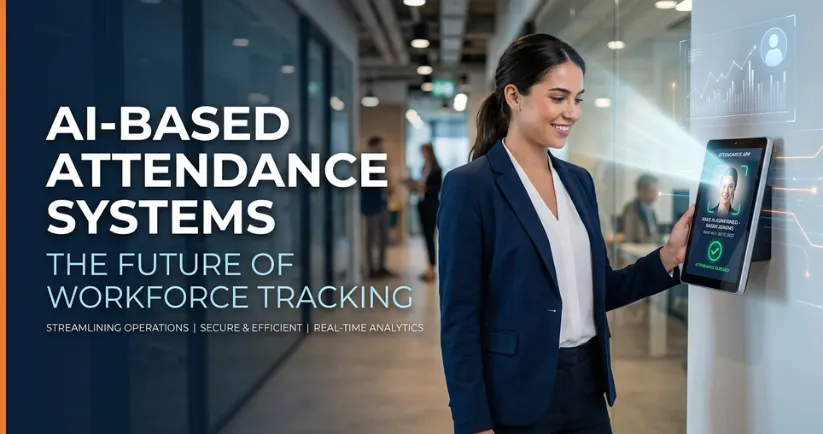
Tracking employee attendance has evolved far beyond manual registers and biometric punch machines. With the rise of artificial intelligence (AI), businesses are now adopting smarter, faster, and more accurate ways to monitor workforce attendance.
An AI-based attendance system is not just about recording in and out times—it leverages technologies like facial recognition, geofencing, and predictive analytics to streamline workforce management. As companies in India move toward hybrid and remote work models, AI-powered attendance systems are becoming essential for ensuring transparency, efficiency, and compliance.
In this blog, we’ll explore how AI is reshaping attendance tracking, its benefits, features, challenges, and why it is the future of workforce management.
What is an AI-Based Attendance System?
An AI-based attendance system uses artificial intelligence and machine learning algorithms to automate and optimize employee attendance tracking. Unlike traditional systems that rely on manual input or hardware-based punching devices, AI systems intelligently capture, verify, and analyze attendance data in real time.
These systems go beyond simple tracking by learning patterns in employee behavior, identifying anomalies, and offering predictive insights. For example, AI can flag frequent late arrivals, detect irregular attendance patterns, and even suggest workforce optimization strategies. This makes attendance management more strategic rather than just administrative.
Key Features of AI-Based Attendance Systems
Facial Recognition Technology
Facial recognition is one of the most powerful features of AI attendance systems. It uses advanced image processing and deep learning algorithms to identify employees based on unique facial features. Unlike fingerprint scanners or ID cards, facial recognition is completely contactless and reduces dependency on physical devices.
It also improves security by ensuring that only the authorized employee can mark attendance. The system can detect spoofing attempts such as photos or videos, making it highly reliable. Additionally, it speeds up the check-in process, especially for organizations with large workforces.
Geofencing & GPS Tracking
Geofencing allows organizations to create virtual boundaries within which employees can mark attendance. This is particularly useful for remote workers, field staff, and sales teams who are constantly on the move.
With GPS tracking, employees can log attendance using mobile devices, and AI verifies whether they are within the permitted work location. This ensures authenticity while providing flexibility to employees. It also helps organizations manage distributed teams more efficiently without compromising on control.
Real-Time Attendance Monitoring
AI-powered systems provide real-time visibility into attendance data. HR managers and team leaders can instantly view who is present, absent, late, or on leave.
This real-time tracking helps in better decision-making. For example, managers can quickly allocate tasks based on employee availability or address absenteeism issues immediately. It also improves operational efficiency by reducing delays caused by manual attendance tracking.
Automated Leave & Shift Management
AI integrates attendance with leave and shift management systems to automate routine HR tasks. It automatically updates attendance records based on approved leaves, holidays, and shift schedules.
This reduces manual intervention and ensures consistency across systems. For organizations with multiple shifts or complex schedules, AI ensures accurate tracking without errors. It also improves employee satisfaction by providing a seamless experience.
Fraud Detection (Buddy Punching Prevention)
One of the major challenges in traditional attendance systems is buddy punching, where one employee marks attendance on behalf of another. AI eliminates this issue through intelligent verification mechanisms.
By analyzing patterns and using facial recognition or location tracking, AI can detect suspicious activities and flag them for review. This not only prevents fraud but also builds a culture of accountability and fairness within the organization.
Predictive Analytics
AI doesn’t just track attendance—it analyzes it. Predictive analytics helps organizations identify trends such as frequent absenteeism, late arrivals, or declining attendance patterns.
With these insights, HR teams can take proactive measures such as employee engagement initiatives, workload adjustments, or policy changes. This transforms attendance data into a valuable decision-making tool rather than just a record-keeping system.
Integration with Payroll Systems
AI-based attendance systems seamlessly integrate with payroll software to ensure accurate salary calculations. Attendance data such as working hours, overtime, and leaves are automatically synced with payroll.
This reduces errors in salary processing and ensures compliance with statutory regulations like PF, ESI, and TDS. It also saves significant time for HR and finance teams by eliminating manual data entry.
Benefits of AI-Based Attendance Systems
Improved Accuracy
AI systems minimize human errors by automating attendance tracking. Whether it’s capturing login times or calculating work hours, everything is recorded with high precision. This ensures reliable data for payroll and compliance purposes.
Time & Cost Savings
Manual attendance tracking requires significant administrative effort. AI automates these processes, reducing the workload on HR teams. Over time, this leads to cost savings by improving efficiency and reducing the need for additional resources.
Enhanced Employee Productivity
When employees know that attendance is being tracked accurately and transparently, it encourages discipline and accountability. AI systems also reduce time spent on manual check-ins, allowing employees to focus more on their work.
Better Compliance
Maintaining accurate attendance records is crucial for labor law compliance in India. AI systems ensure proper documentation and audit trails, making it easier for organizations to comply with legal requirements.
Contactless & Hygienic
In a post-pandemic world, contactless systems have become a necessity. AI-based attendance systems eliminate physical touchpoints, ensuring a safer and more hygienic workplace environment.
Scalability
As organizations grow, managing attendance for a larger workforce becomes complex. AI systems can easily scale to accommodate increasing employee numbers without compromising performance or accuracy.
AI vs Traditional Attendance Systems
| Feature | Traditional Systems | AI-Based Systems |
|---|---|---|
| Accuracy | Prone to errors | Highly accurate |
| Security | Easy to manipulate | Fraud detection enabled |
| Accessibility | On-site only | Remote & mobile-friendly |
| Insights | Limited | Advanced analytics |
| Integration | Manual | Automated with HR & payroll |
Use Cases Across Industries
IT & Remote Workforce
AI attendance systems are ideal for IT companies and remote teams. Employees can mark attendance through mobile apps, and managers can monitor performance without needing a physical office presence.
Manufacturing
In manufacturing units with large workforces, facial recognition speeds up attendance marking and reduces queues during shift changes. It also ensures accurate tracking of worker hours.
Retail & Field Sales
For retail and field sales teams, AI systems provide location-based attendance tracking. Managers can verify whether employees are visiting assigned locations, improving accountability and efficiency.
Healthcare
Hospitals and healthcare facilities benefit from contactless attendance systems, ensuring hygiene while managing staff efficiently in critical environments.
Challenges of AI-Based Attendance Systems
Despite their advantages, AI-based attendance systems come with certain challenges. The initial implementation cost can be higher compared to traditional systems, especially for small businesses. Privacy concerns related to facial recognition and location tracking must be addressed through proper data protection policies and transparency.
Additionally, these systems rely on internet connectivity, which may be a limitation in some areas. Employee training and change management are also essential to ensure smooth adoption and maximize the benefits of the system.
Future Trends in AI Attendance Systems
The future of AI in attendance management is highly promising. Emerging trends include behavioral analytics that provide deeper insights into employee productivity, voice recognition systems for attendance marking, and AI-powered chatbots that handle attendance-related queries.
Integration with wearable devices and IoT is also gaining traction, enabling real-time tracking of employee activity. As technology continues to evolve, AI will play a central role in shaping smarter, more efficient workplaces.
Why Businesses in India Are Adopting AI Attendance Systems
Indian businesses are rapidly embracing AI-powered attendance systems due to changing workforce dynamics and regulatory requirements. The rise of hybrid work models has made traditional systems less effective, while AI provides the flexibility needed to manage remote and distributed teams.
Additionally, businesses are focusing on improving employee experience and operational efficiency. AI systems help achieve both by automating processes, reducing errors, and providing actionable insights.
How to Choose the Right AI-Based Attendance System
Choosing the right system is critical for success. Businesses should look for solutions that are user-friendly, mobile-accessible, and easily integrable with existing HR and payroll systems. Data security and compliance features should be a top priority, especially when dealing with sensitive employee information.
Customization options, scalability, and reliable customer support are also important factors to consider. A well-chosen system not only improves attendance management but also enhances overall HR efficiency.
Conclusion
AI-based attendance systems are transforming the way organizations track and manage their workforce. By combining automation, intelligence, and real-time insights, these systems offer a smarter and more efficient approach to attendance management.
As businesses continue to evolve, adopting AI-powered solutions will be essential for staying competitive. Organizations that invest in AI today will be better equipped to handle the challenges of tomorrow’s workforce.